This page is password protected

Book bonus
Your book bonus toolkit
Thanks for reading Learned and Unlearned. Here's everything that goes with it: printables to help you get heard, the make-ahead recipes I live on, a lower-histamine food guide and your own protein and fibre guide.
Printables
Your book bonus downloads
Print them, stick them on the fridge, take them to appointments. Tap a picture to open it, or hit download.
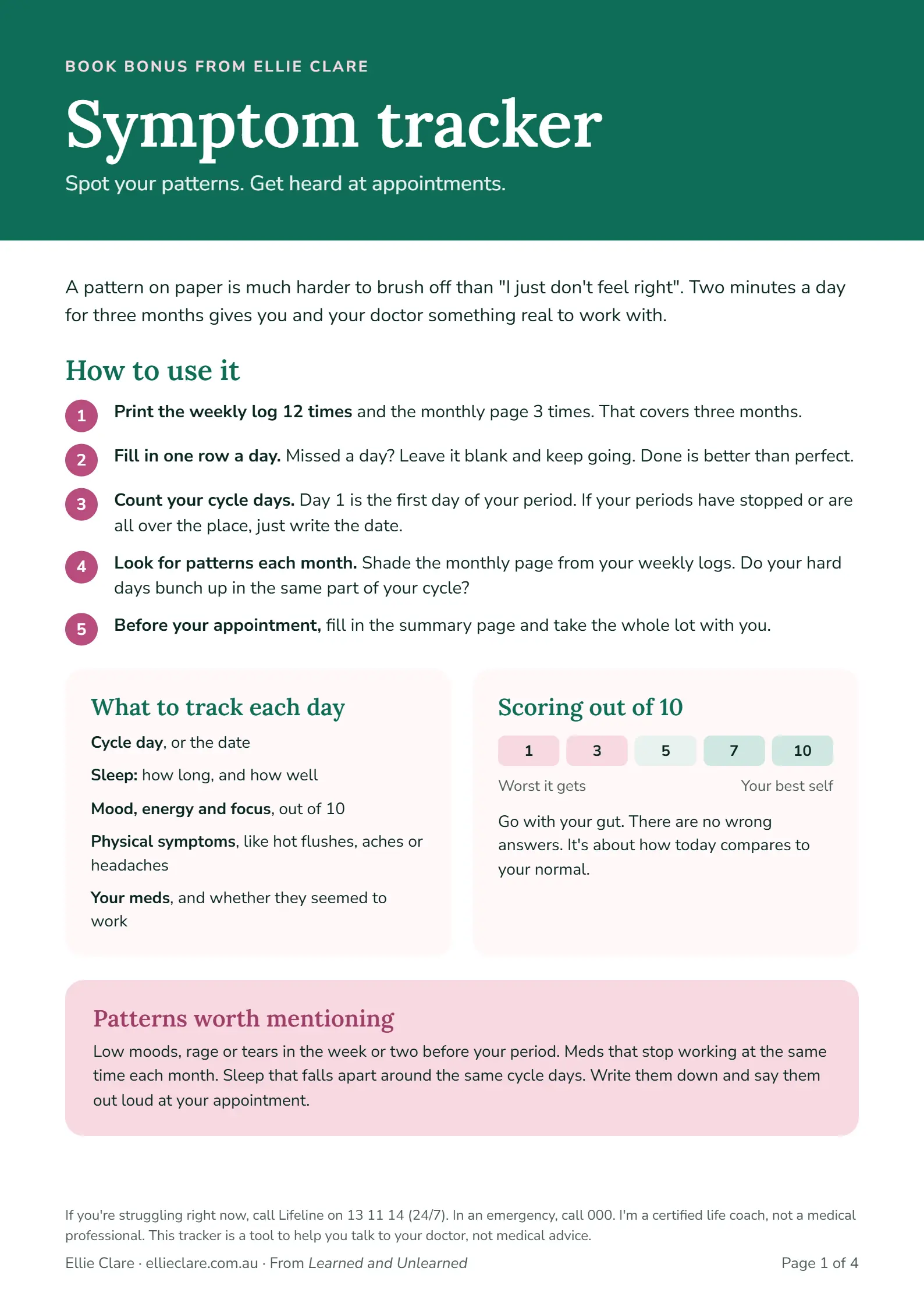
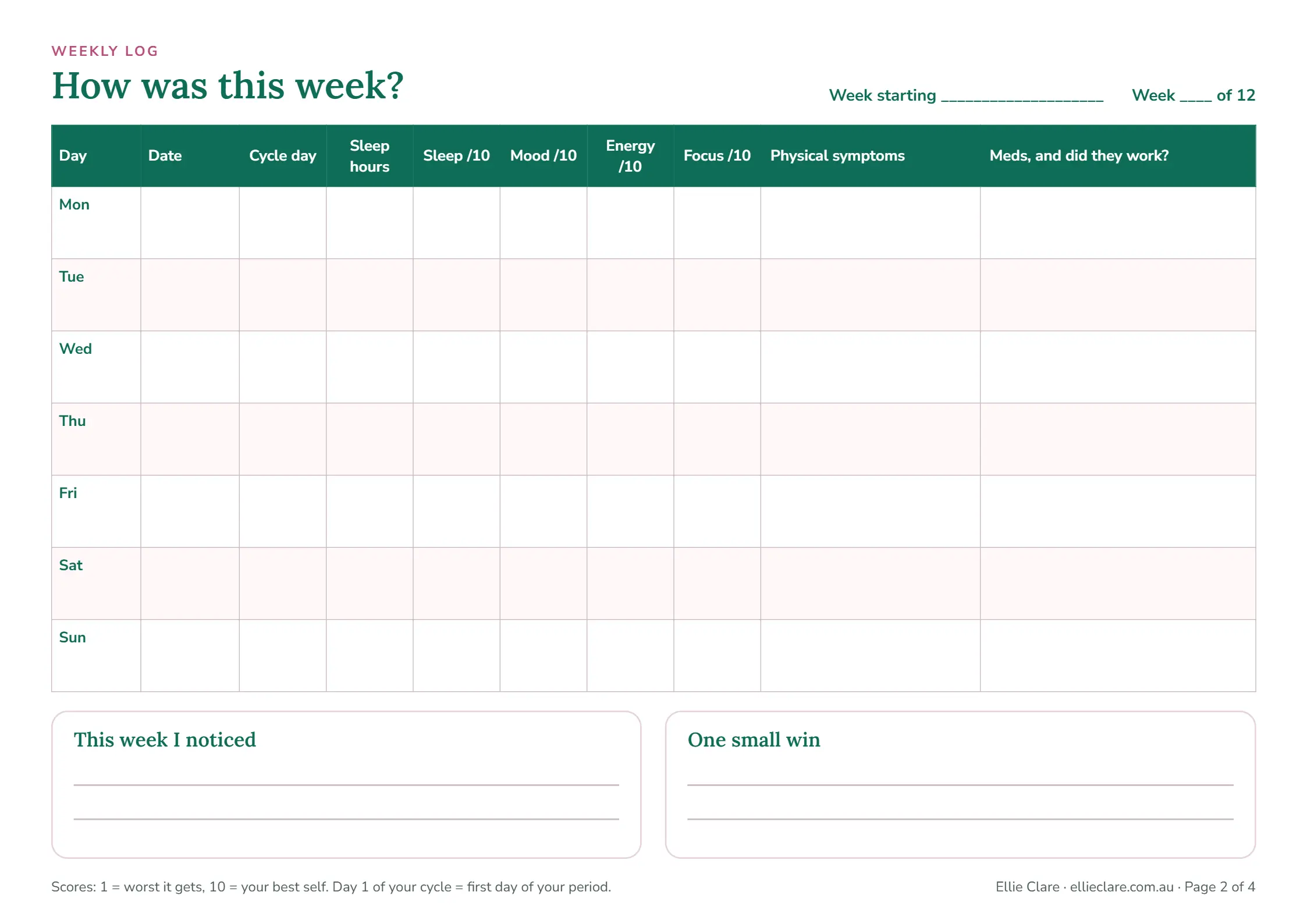
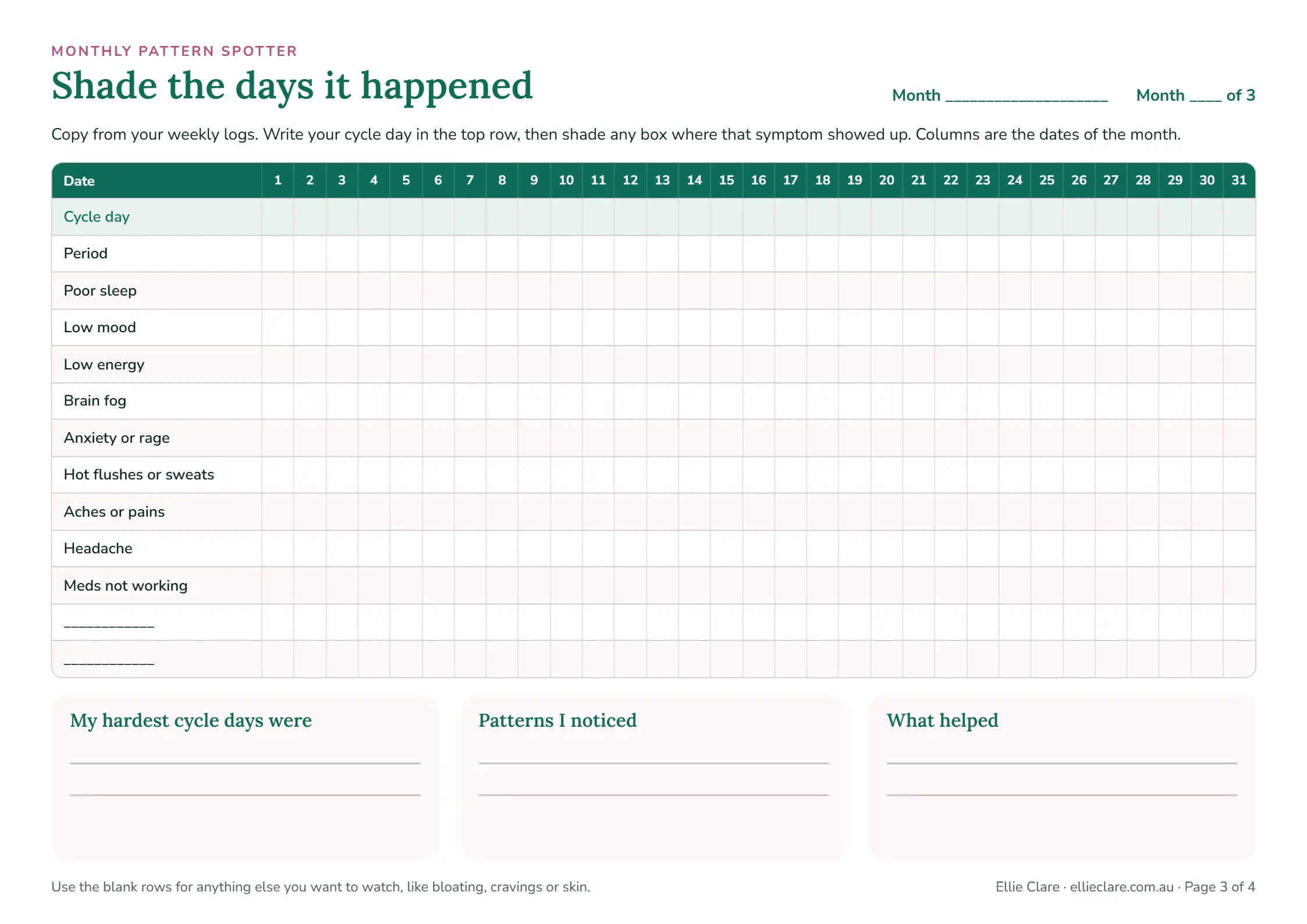
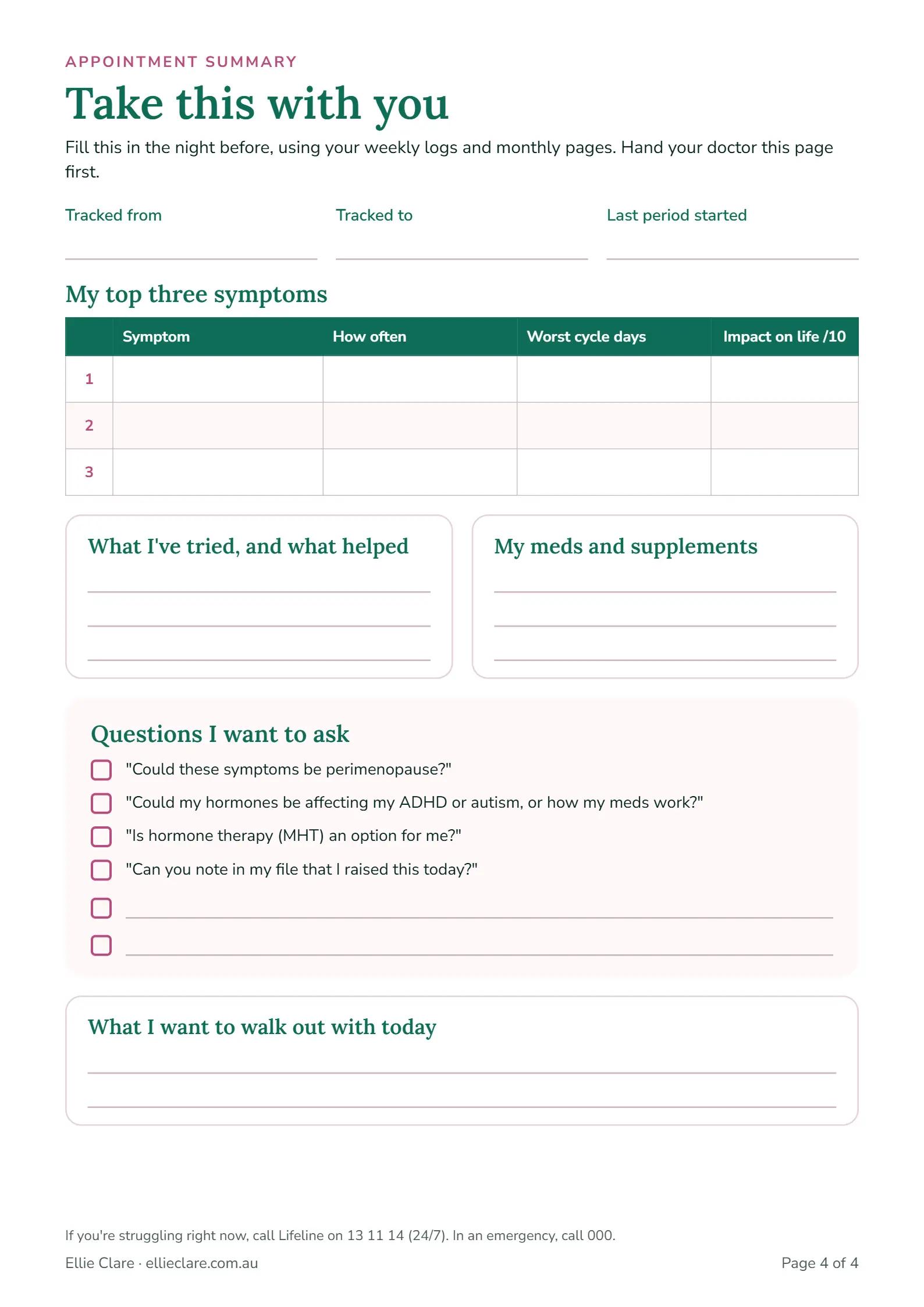
Symptom tracker
Track your cycle, sleep, mood, energy, focus and symptoms for three months. Then take the summary to your appointment so you get heard.
Book cheat sheet
The whole book on three pages. Five things to remember, plus one idea and one action from every chapter.
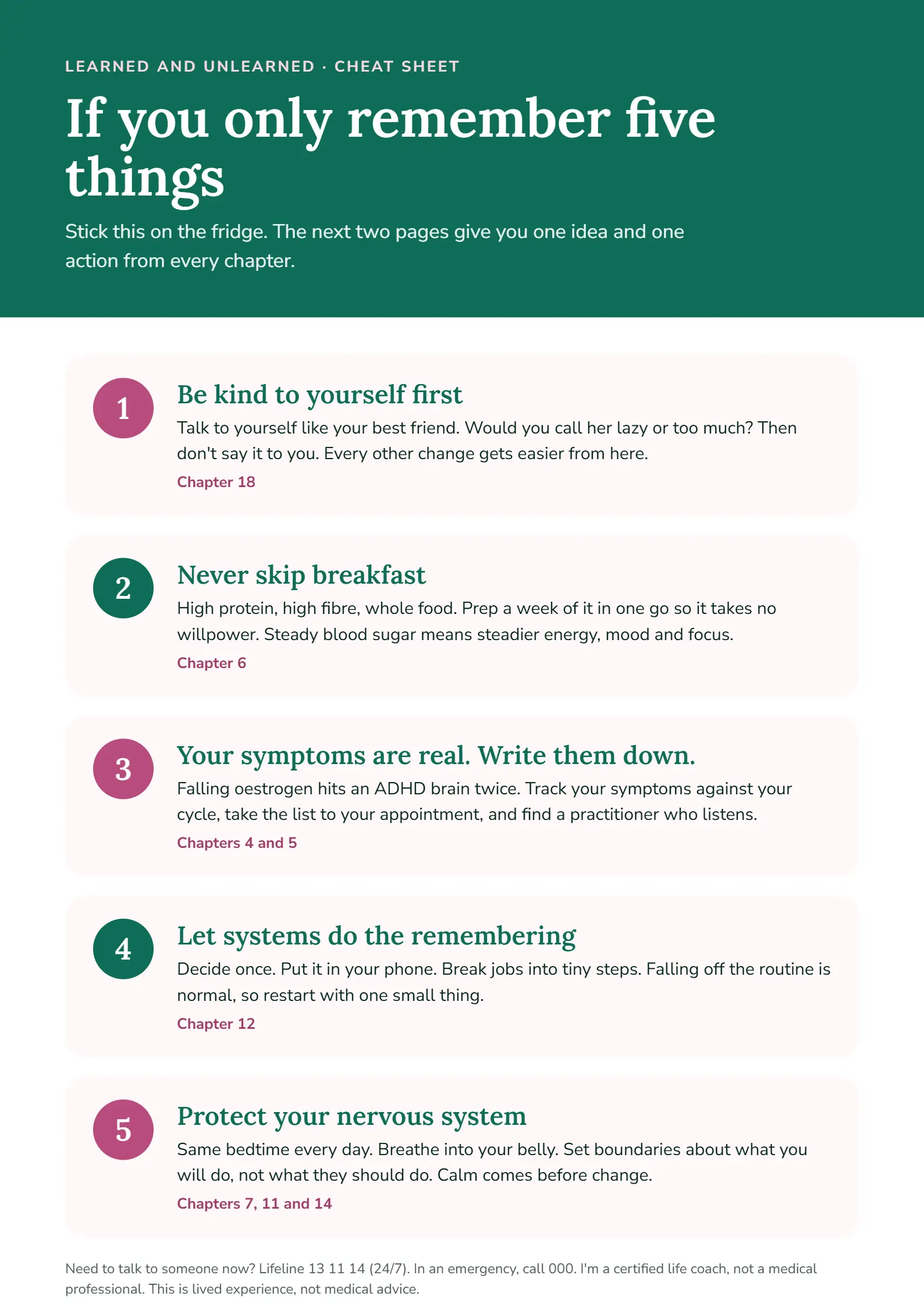
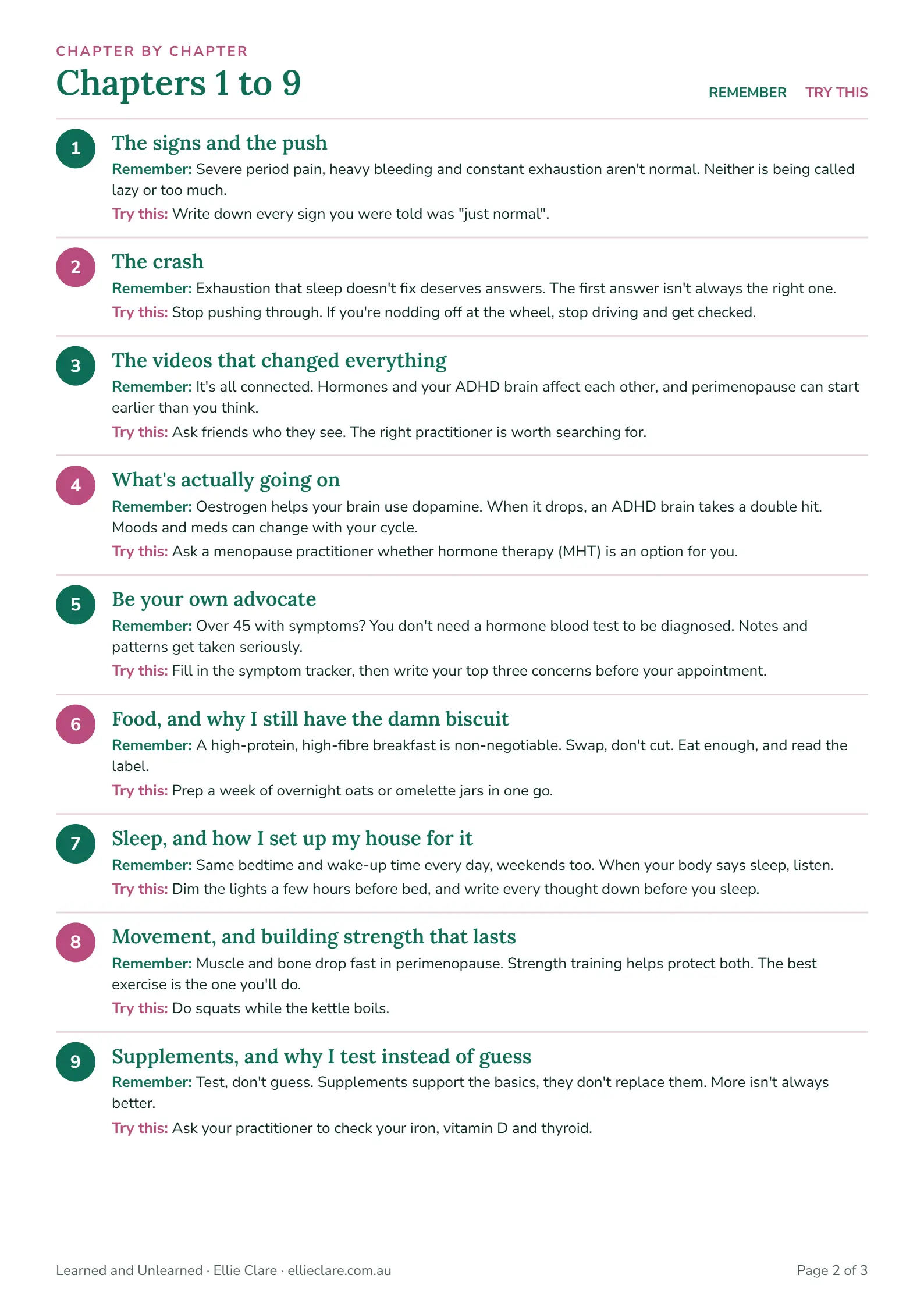
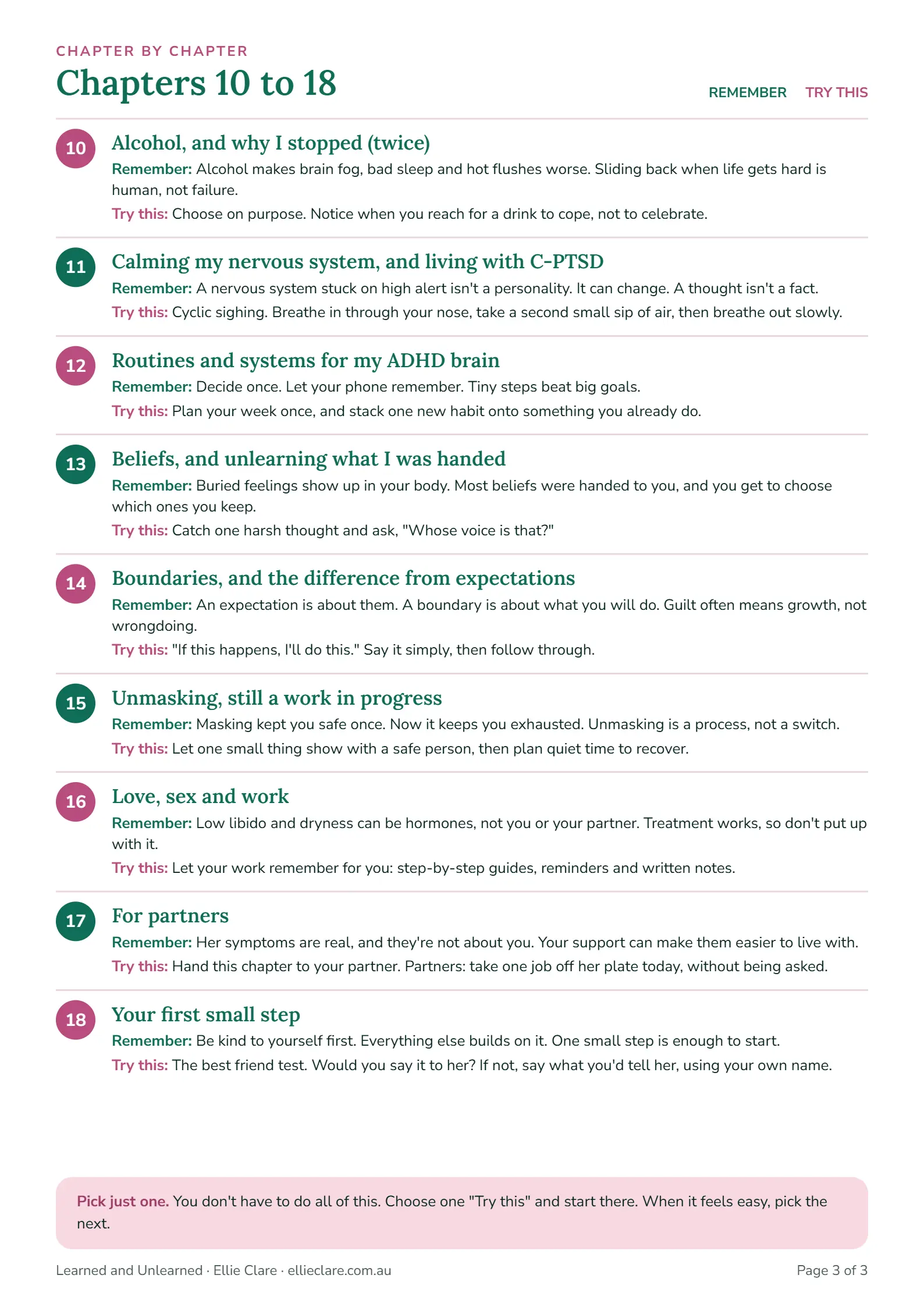
These are for your own personal use. Please don't share them. Point friends to the book instead, so they get everything too.
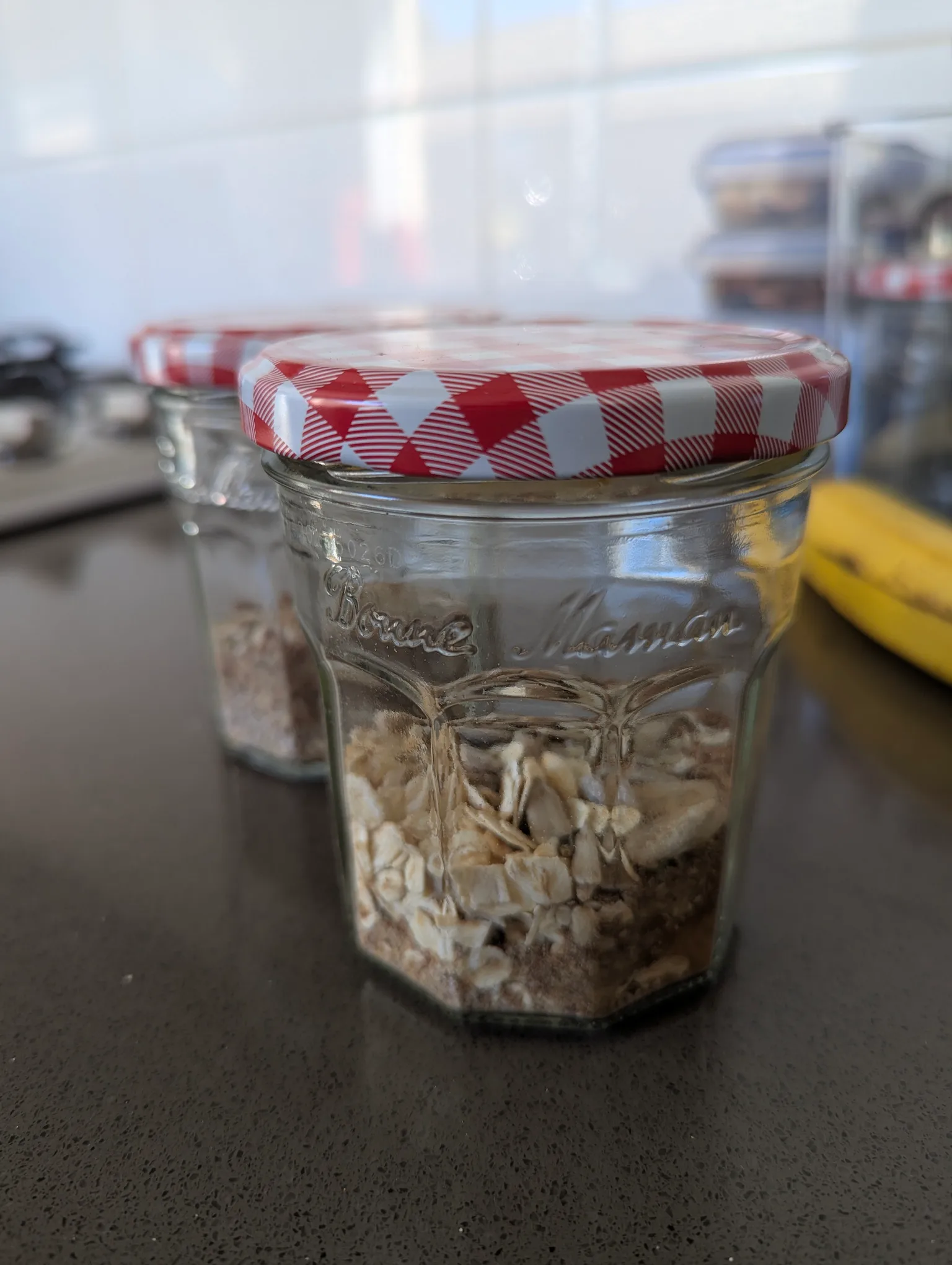
Overnight oats jars
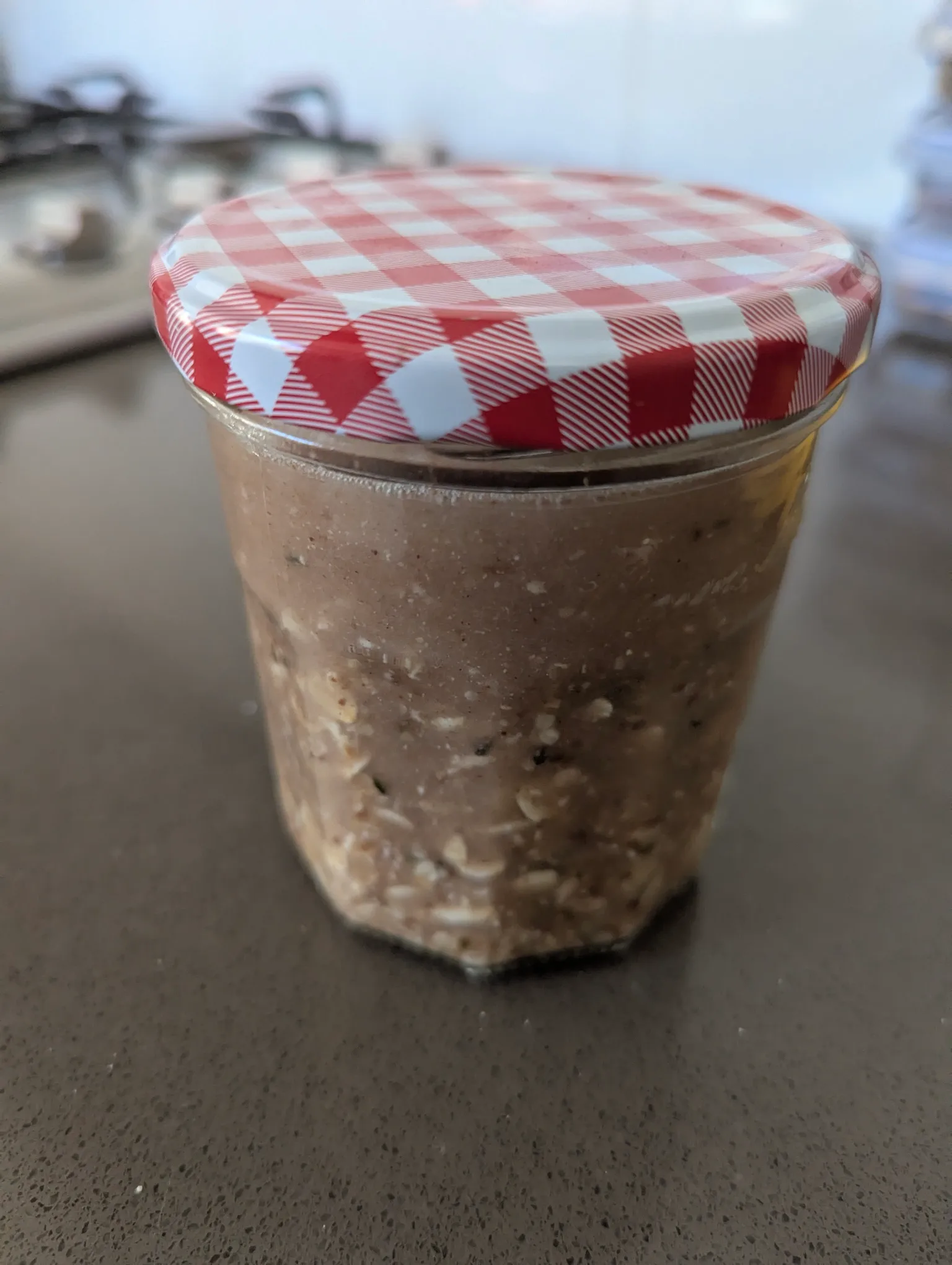
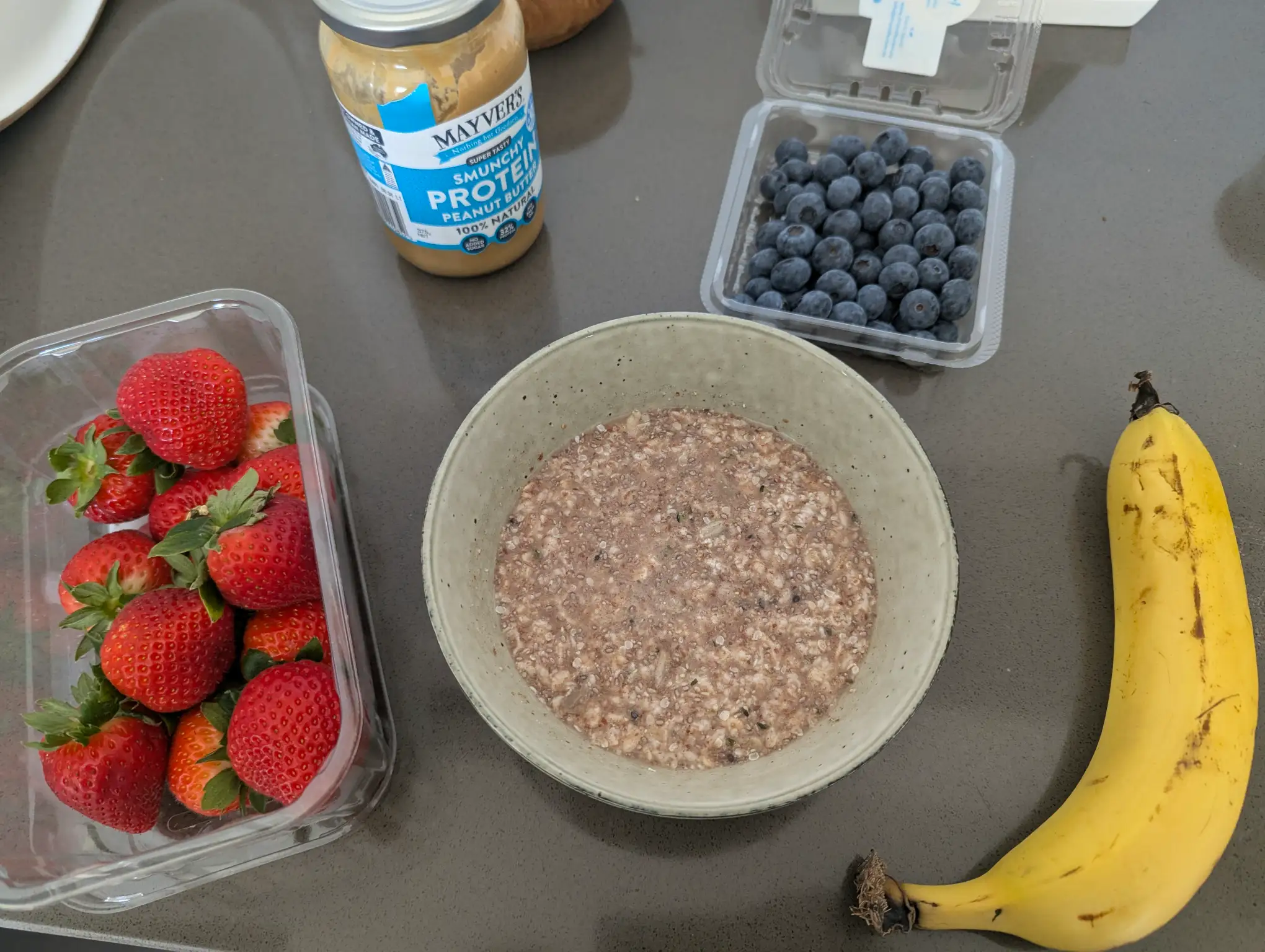
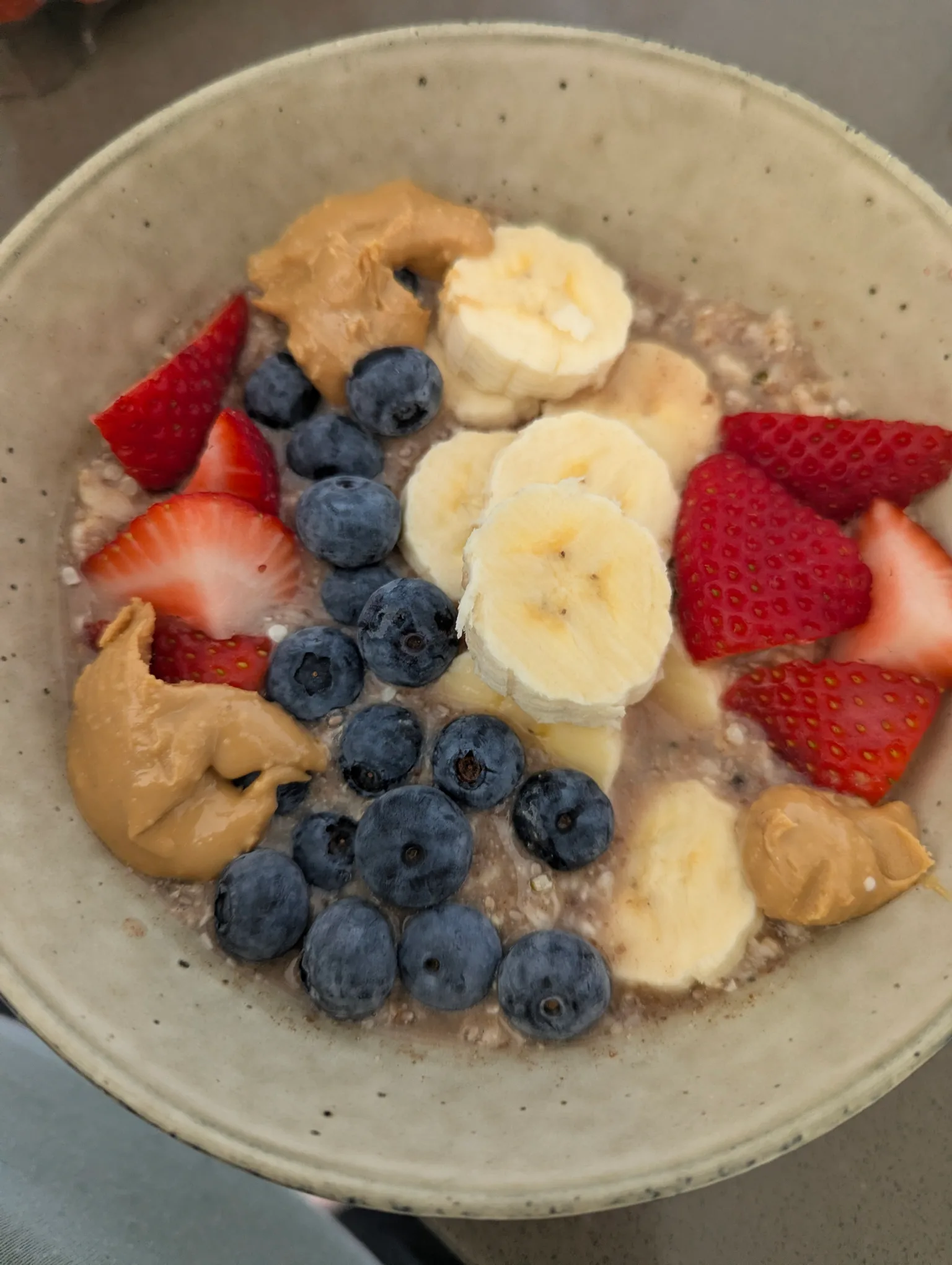
Show ingredients and methodHide ingredients and method
Ingredients
Tick what you've got.
Dry mix, per jar
To serve, per jar
You'll also need
Method
Prep day
- Add to each glass jar:
- 1/3 cup oats (32g)
- 10g chia seeds
- 6g flaxseed meal
- 10g pumpkin and sunflower seeds
- 0.5g cinnamon
- Pop the lids on and store in the pantry.
The day before
- Fill a jar with water, shake and refrigerate.
On the day
- Pour the jar into a bowl.
- Microwave for 1 minute 10 seconds.
- Chop 1 small banana (45g) and add it on top.
- Add 20g real peanut butter.
Omelette jars
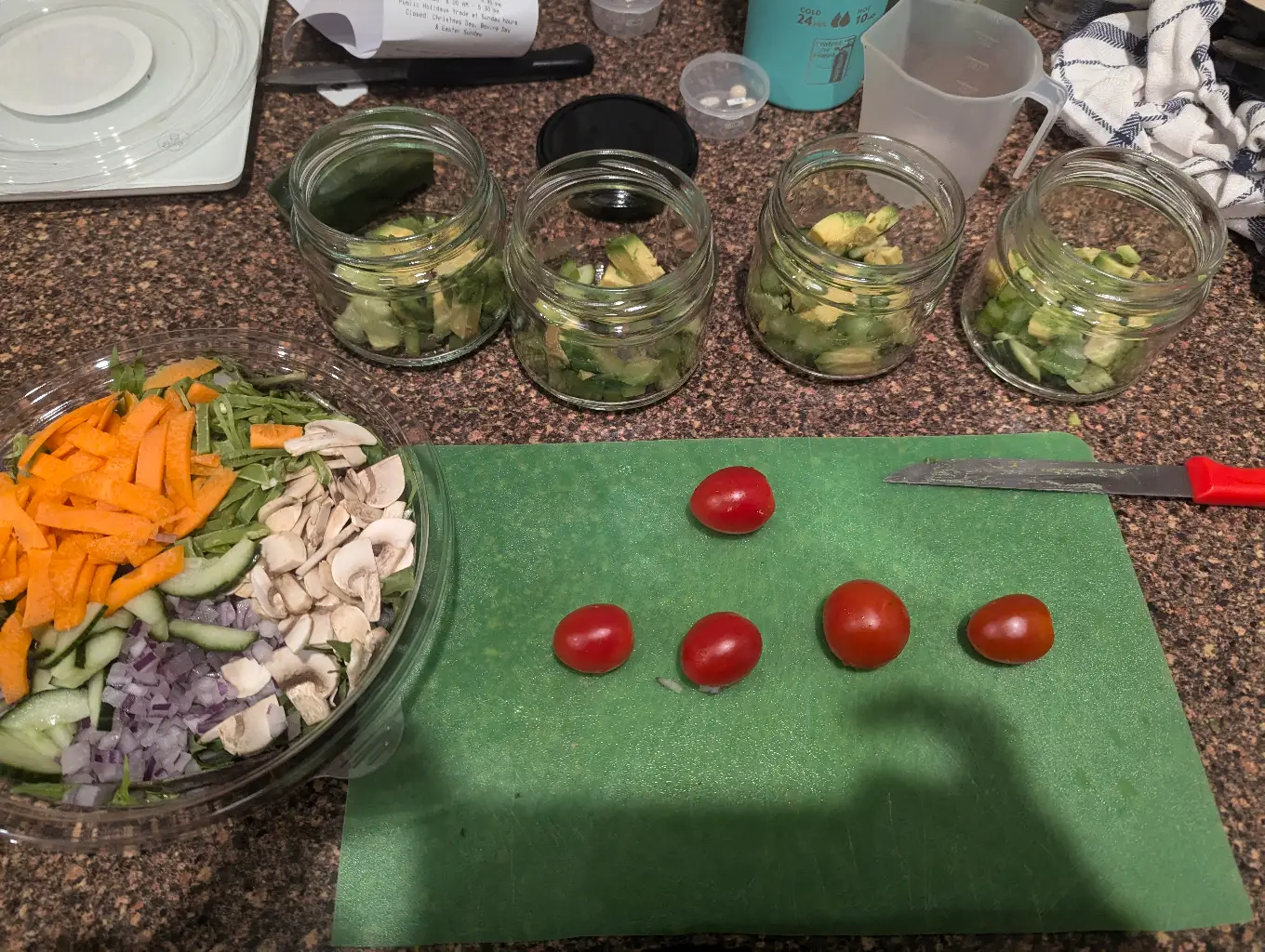
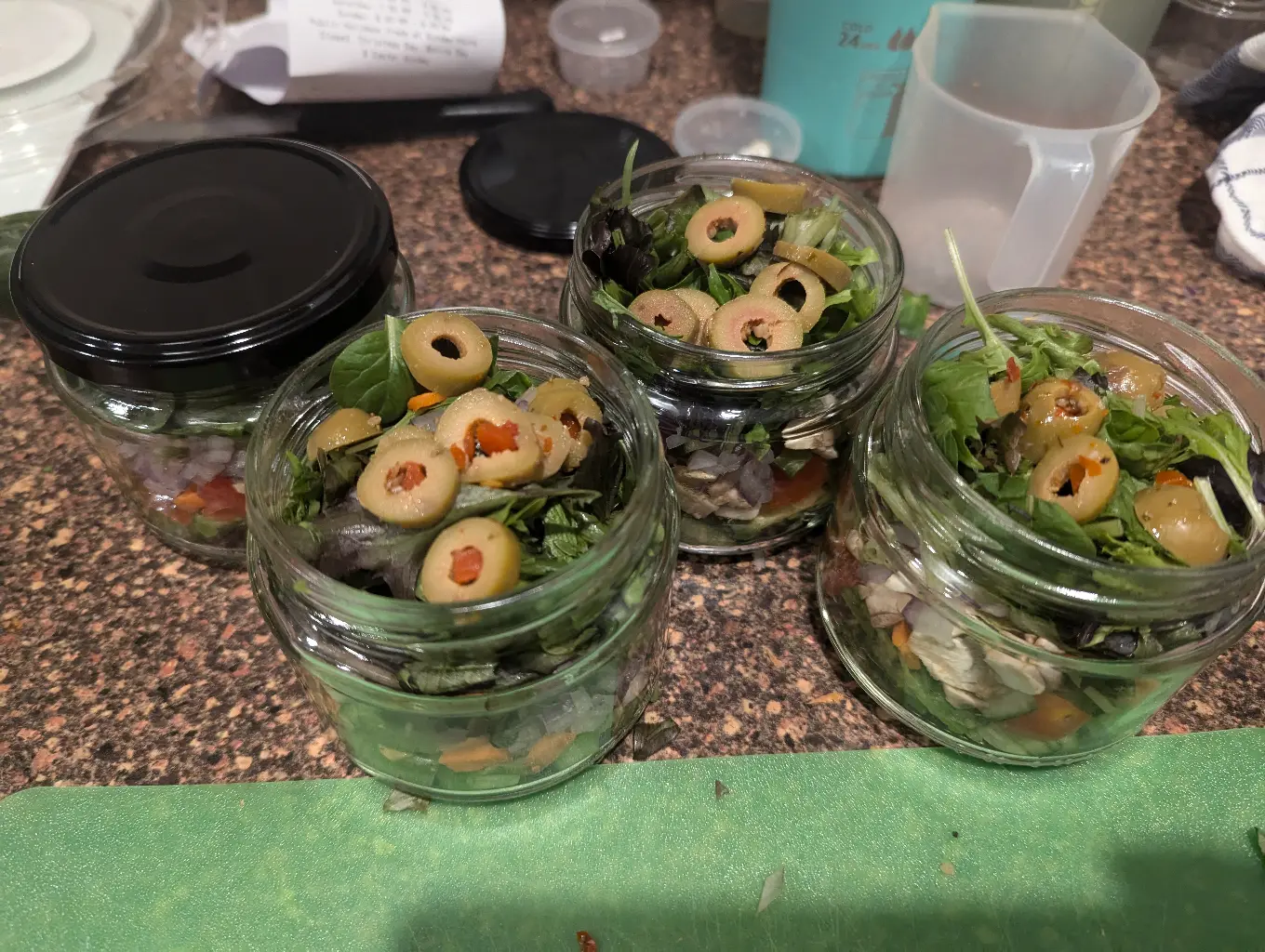
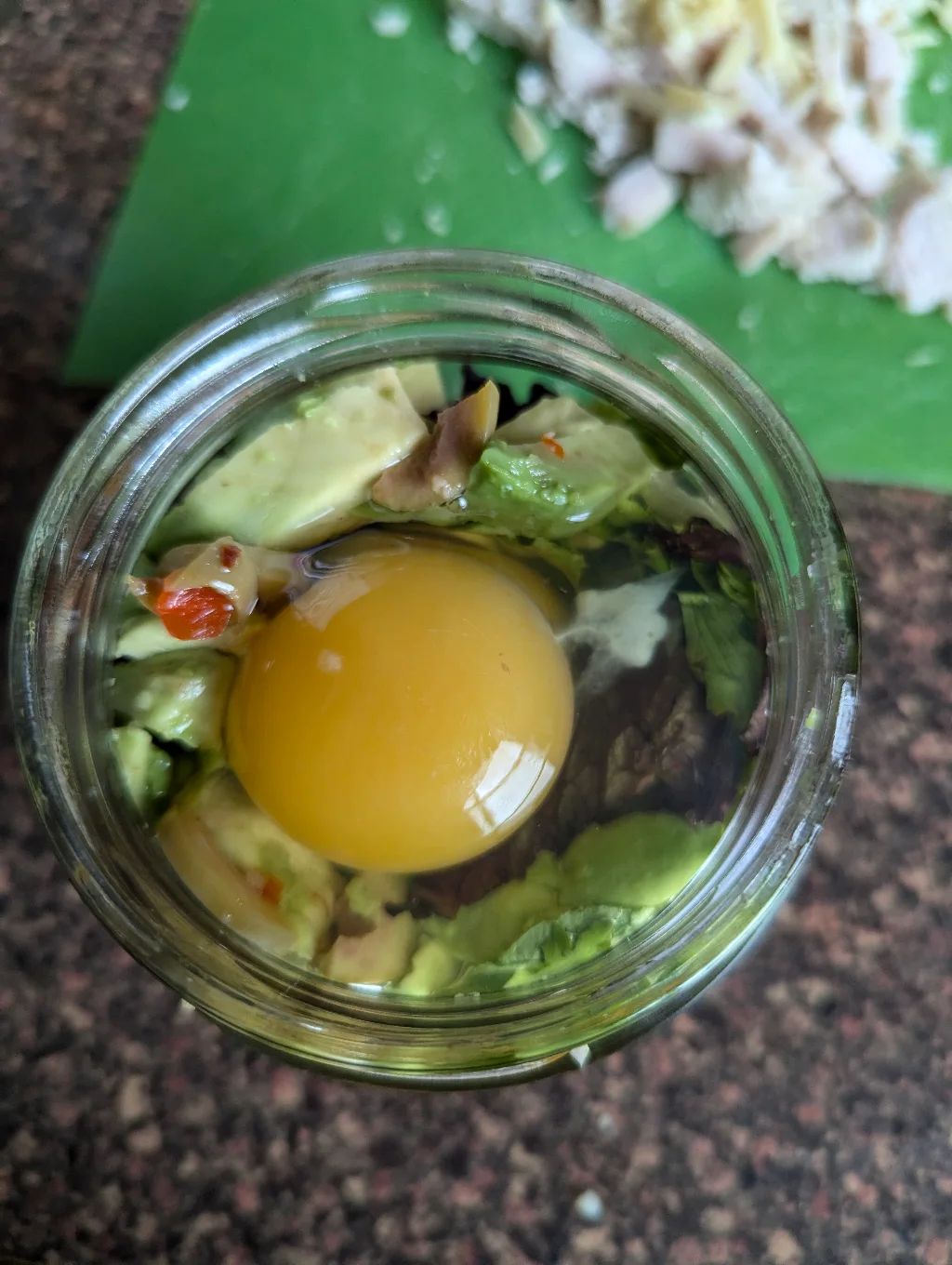
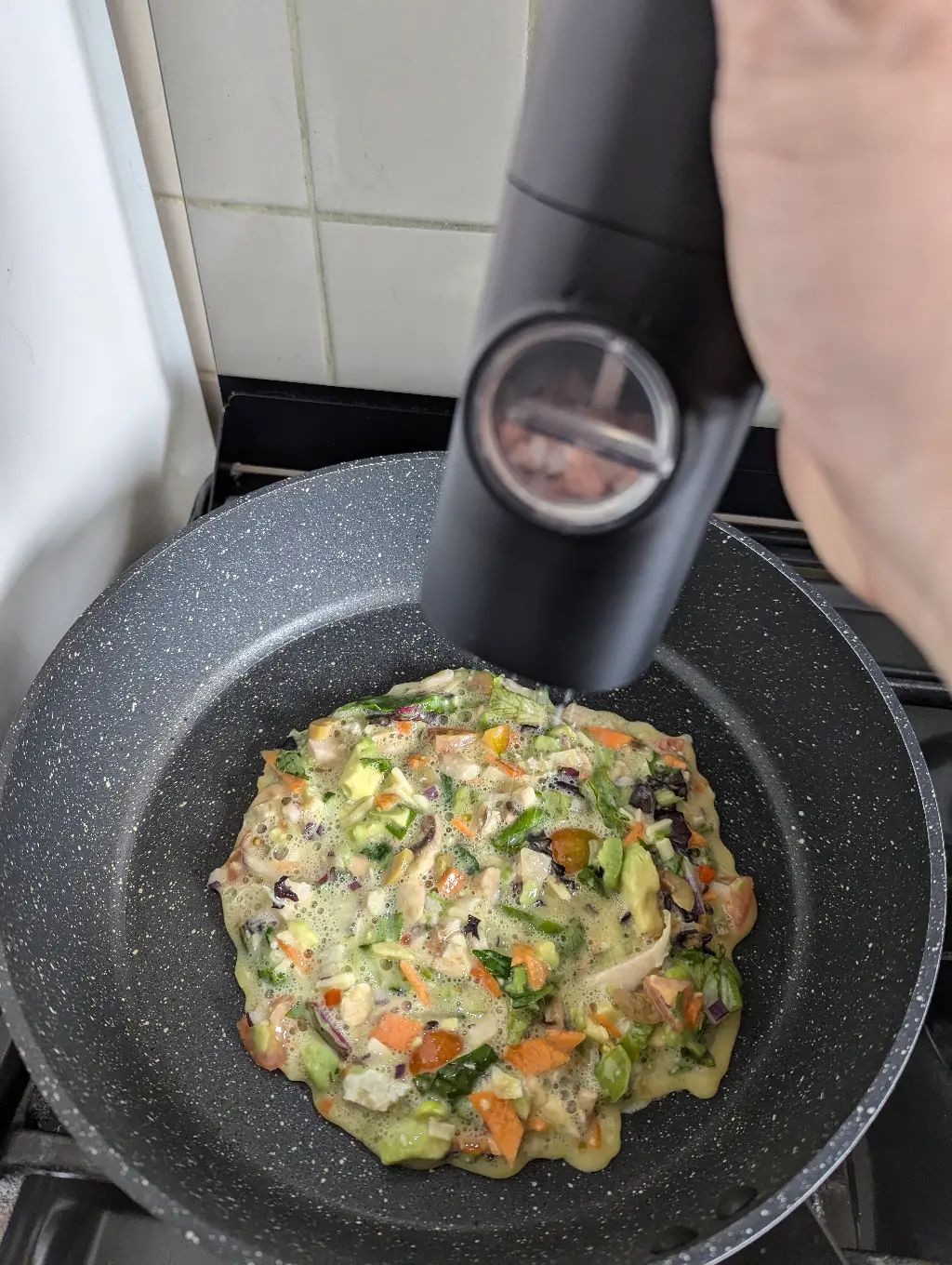
Show ingredients and methodHide ingredients and method
Ingredients
Tick what you've got. Amounts make 8 serves.
Veggies
Chicken nuggets
For cooking
You'll also need
Method
1. Veggie prep
- Cut into small pieces:
- 200g avocado
- 60g capsicum
- 80g carrot
- 60g red carrot
- 90g celery
- 100g cherry tomatoes
- 60g chilli olives
- 90g cucumber
- 60g mesclun
- 50g mushroom
- 80g red onion
- Divide evenly between 8 glass jars, one per serve.
- Store in the fridge.
2. Chicken nuggets
- Cut 314g chicken into 1 to 2cm pieces.
- In a container, mix 60g almond meal, 20g Cajun spice, and salt and pepper to taste.
- Add the chicken and coat it well.
- Cook in a hot, dry pan. The oil from the almond meal is enough.
- Flip once the bottom is no longer translucent.
- Cook until cooked through. It usually starts to smell yummy when it's ready. Don't overcook.
- Split into 8 serves. Freeze, or keep in the fridge until you need it.
3. Cook the omelettes (4 to 8 at a time)
- Tip 1 jar of veggies into a bowl.
- Add 1 serve of chicken nuggets.
- Add 2 eggs, salt, pepper and avo and egg seasoning. Mix well.
- Heat a little coconut oil or butter in a pan.
- Pour in the mix and cook, flipping halfway.
- Pop into a glass container, ready to freeze or eat.
4. Reheat
- If frozen, move it to the fridge the day before.
- Take the lid off and microwave for 1 minute 10 seconds.
- Add salt if needed, and enjoy.
Oat and cranberry bars
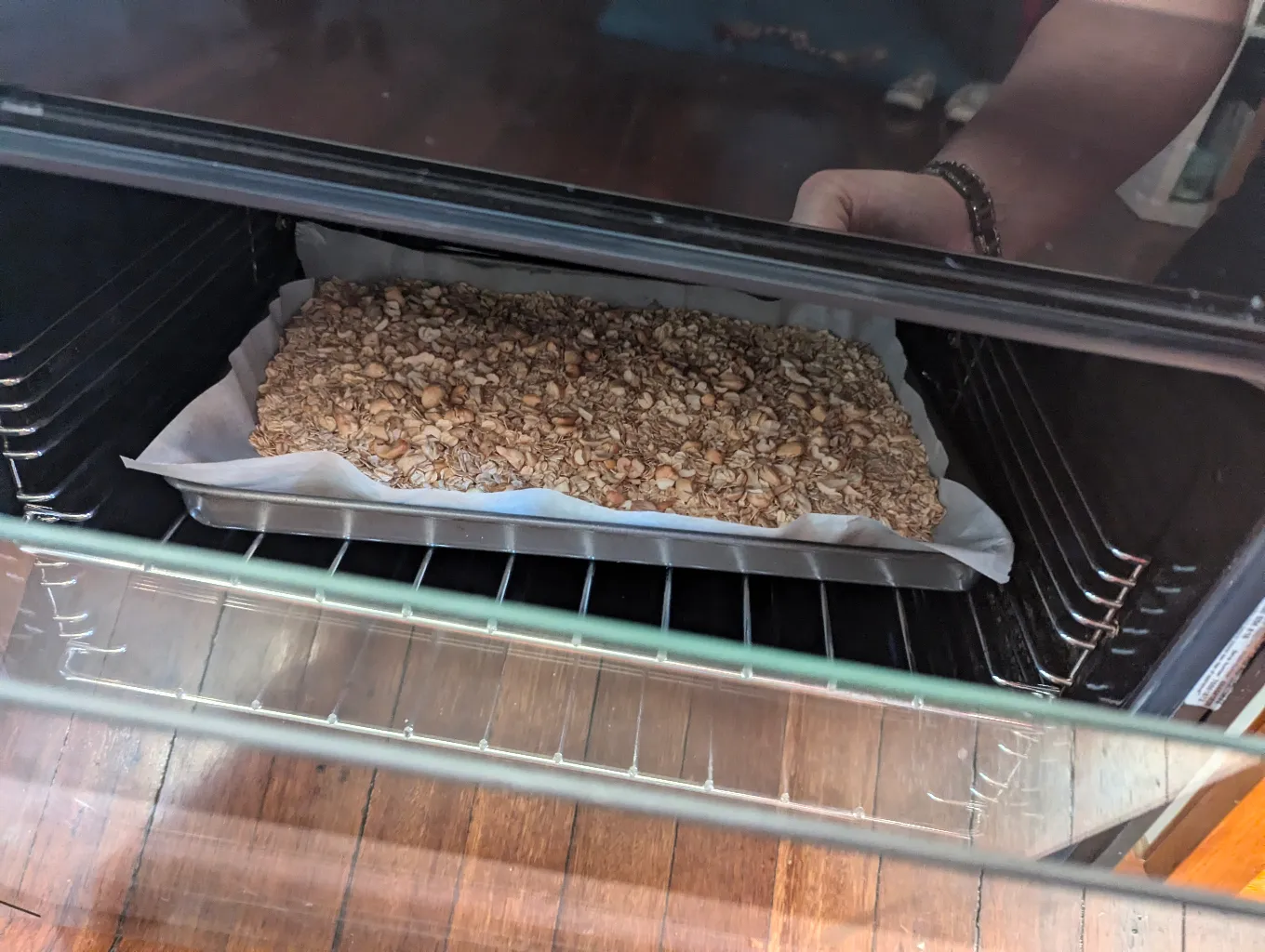
Show ingredients and methodHide ingredients and method
Ingredients
Tick what you've got.
You'll also need
Method
1. Toast
- Heat the oven to 180°C (160°C fan).
- Line the tin with baking paper.
- Roughly chop 80g almonds.
- Spread 230g rolled oats and the chopped almonds on a tray. Bake for 5 minutes.
- Stir, then bake for another 3 to 5 minutes until lightly golden.
- Tip into a large bowl.
2. Bind
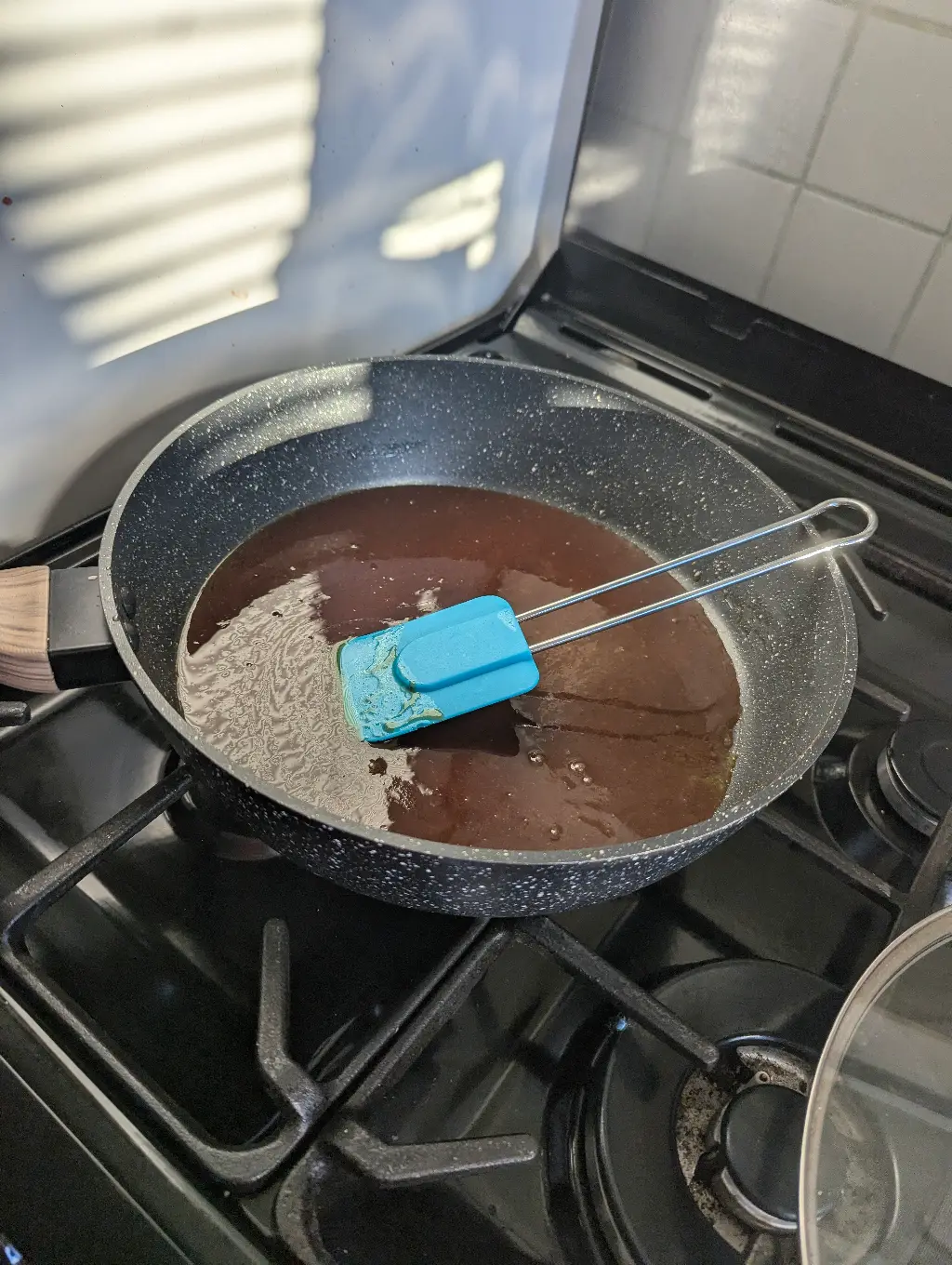
- In a small saucepan over medium heat, add:
- 46g unsalted butter
- 120g honey
- 50g brown sugar
- 1g vanilla extract
- a pinch of salt
- Stir now and then until it's bubbling and the sugar has dissolved.
- Pour over the oats and mix well.
- Leave to cool for 5 minutes.
3. Press
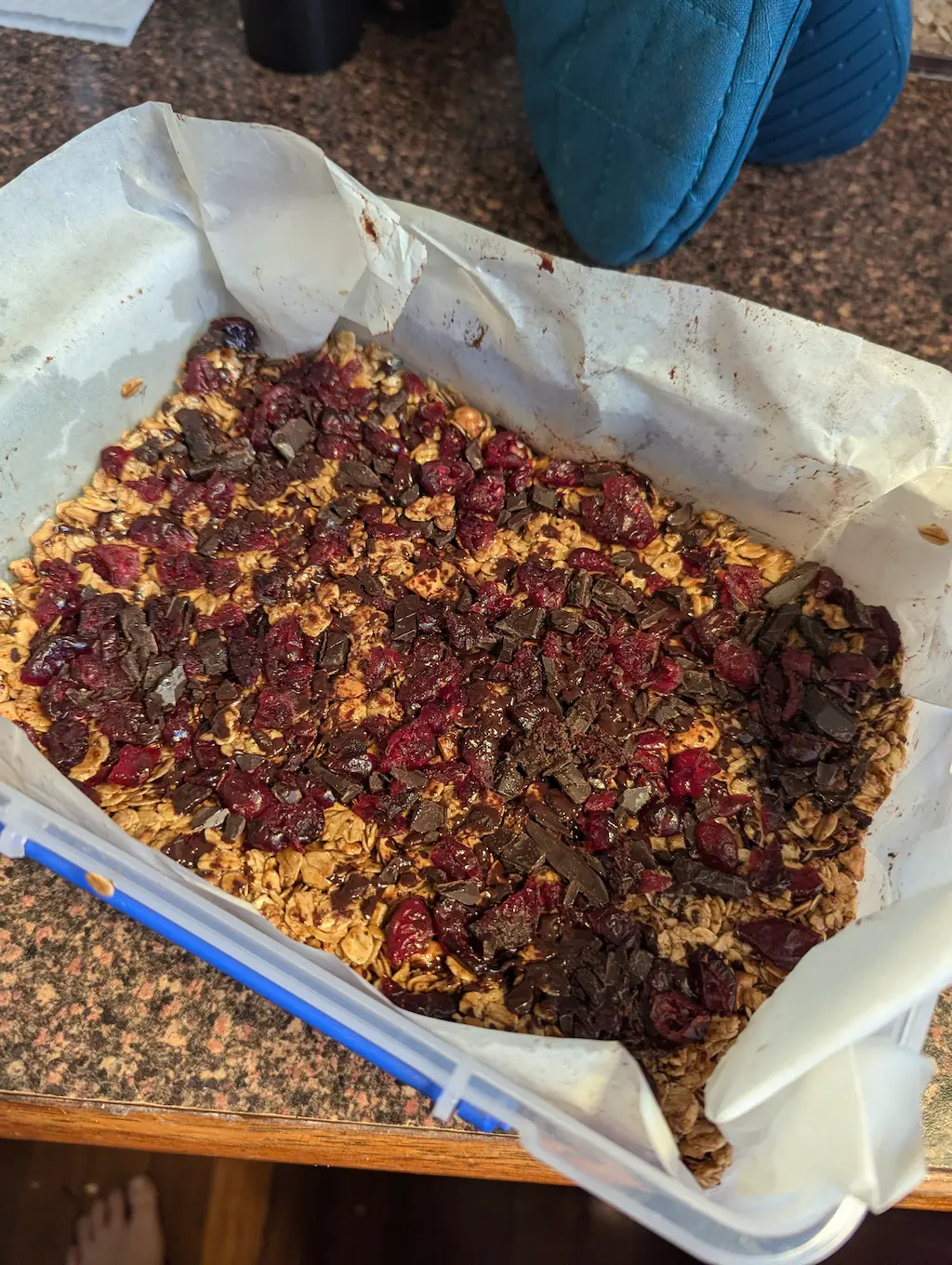
- Roughly chop 60g dried cranberries and stir them in.
- Stir in 15g mini chocolate chips. If a few melt, that's fine. They help hold the bars together.
- Tip into the tin and press down hard for about 1 minute.
- Scatter the last 5g chocolate chips on top and press them in.
4. Set and store
- Cover and chill for at least 2 hours.
- Lift out and cut into 12 bars.
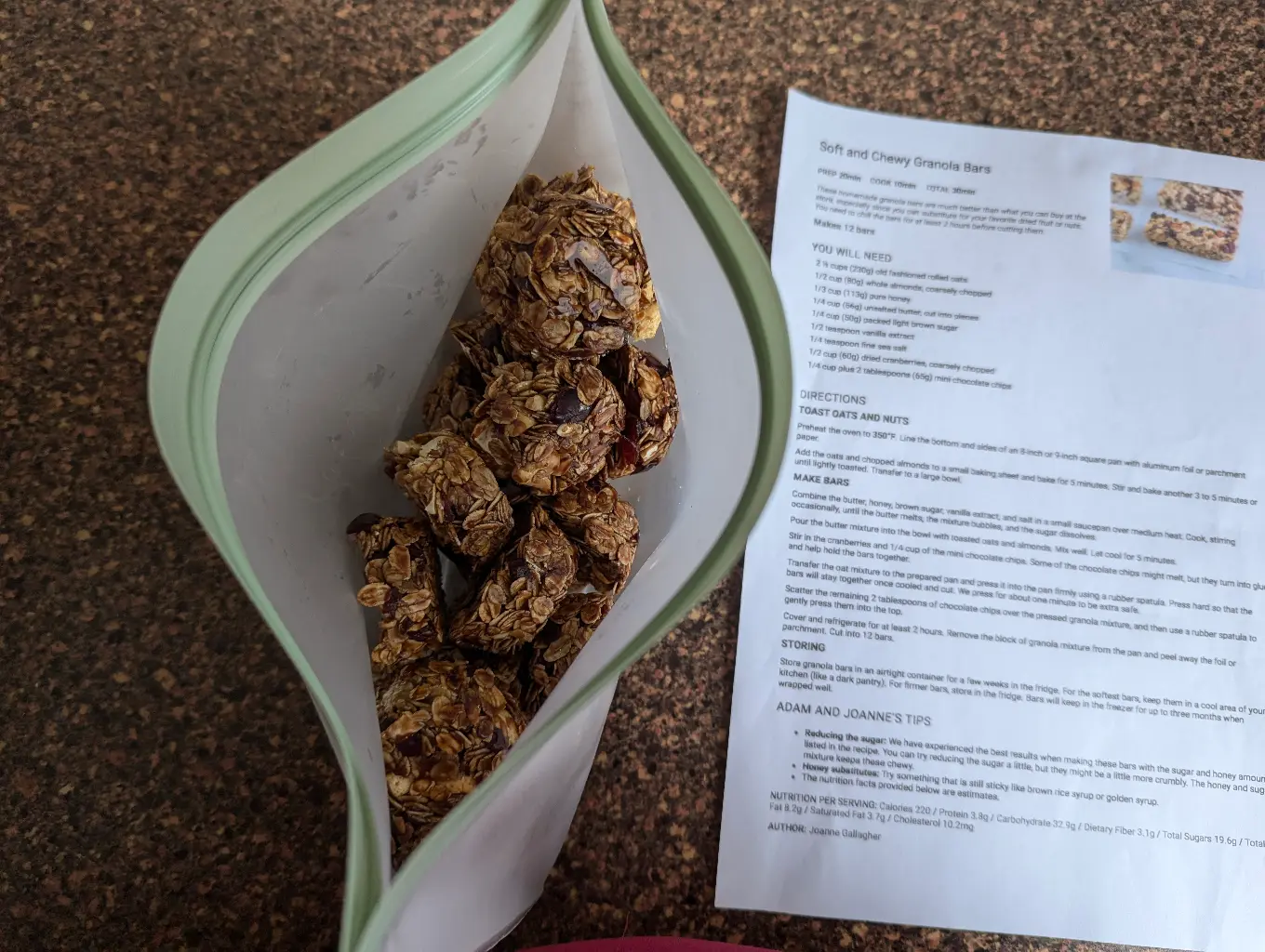
- Keep in an airtight container. Pantry for softer bars, fridge for firmer ones. Wrapped well, they freeze for up to 3 months.
Adapted from a recipe by Adam and Joanne at Inspired Taste.
Worth a try
Foods higher in histamine
If you think histamine plays a part in your PMDD or perimenopause symptoms, these are the foods most lists suggest cutting back on. You don't need to cut them all. Start small and notice what changes.
Aged and fermented
- Aged cheese, like parmesan, cheddar and blue cheese
- Sauerkraut and kimchi
- Kombucha and kefir
- Soy sauce and miso
- Vinegar and pickles
The bacteria that ferment food can make histamine.
Cured, smoked and tinned
- Salami, ham, bacon and chorizo
- Smoked salmon
- Tinned tuna, sardines and anchovies
- Leftover meat and fish kept in the fridge
Histamine builds up the longer meat and fish sit.
Drinks
- Wine, especially red
- Beer and champagne
- Black and green tea
- Energy drinks
Alcohol also slows down the enzyme that clears histamine from your body.
Some fruit and veg
- Tomatoes and tomato paste
- Spinach and eggplant
- Avocado
- Citrus, strawberries and pineapple
- Chocolate
Some of these contain histamine. Others may trigger your body to release it.
Easy ways to cut back
- Eat it fresh. Cook and eat meat and fish soon after you buy them.
- Freeze, don't fridge. If you prep ahead like I do, freeze anything you won't eat in the next day or two.
- Swap aged for fresh. Try ricotta or cottage cheese instead of aged cheese.
- Keep a diary. Note what you eat and how you feel for a few weeks. Bring it to your next appointment.
- Add foods back. After a few weeks, bring foods back one at a time to see what actually bothers you.
This is a general list, not a diagnosis or treatment plan. Lists vary between sources, and research on low-histamine eating is still limited. Don't cut out lots of foods long term. Try it for a few weeks with your GP or a dietitian. If you have a history of disordered eating, skip this list and talk to your practitioner first. Source: Comas-Basté et al., Biomolecules, 2020.
Your daily guide
How much protein and fibre?
Pop in your details for a rough daily guide, based on Australian guidelines. Then see how far each recipe gets you.
| Recipe, per serve | Protein | Fibre |
|---|---|---|
| Overnight oats jar | about 15g | about 13g (52%) |
| Omelette jar | about 25g | about 3g (12%) |
| Oat and cranberry bar | about 4g | about 3g (12%) |
These are general guides, not personal advice. Protein is 0.75g per kg of body weight a day (0.94g per kg if you're 70 or over), or 46g (57g over 70) if you skip your weight. Fibre is 25g a day for adult women. Source: NHMRC Nutrient Reference Values. Recipe numbers are approximate. If you're strength training, have a health condition, or have a history of disordered eating, talk to your practitioner before using numbers like these.
More recipes coming soon
I'll email you when new ones are added.
Make-ahead frittata
Coming soon
Wholefood biscuits for your cuppa
Coming soon
Audio Version
AuADHD and menopause support for women, from someone who's lived it.


Join the community
Small steps, real stories and new resources, straight to your inbox.
© Copyrights 2026 | Ellie Clare | All rights reserved.